
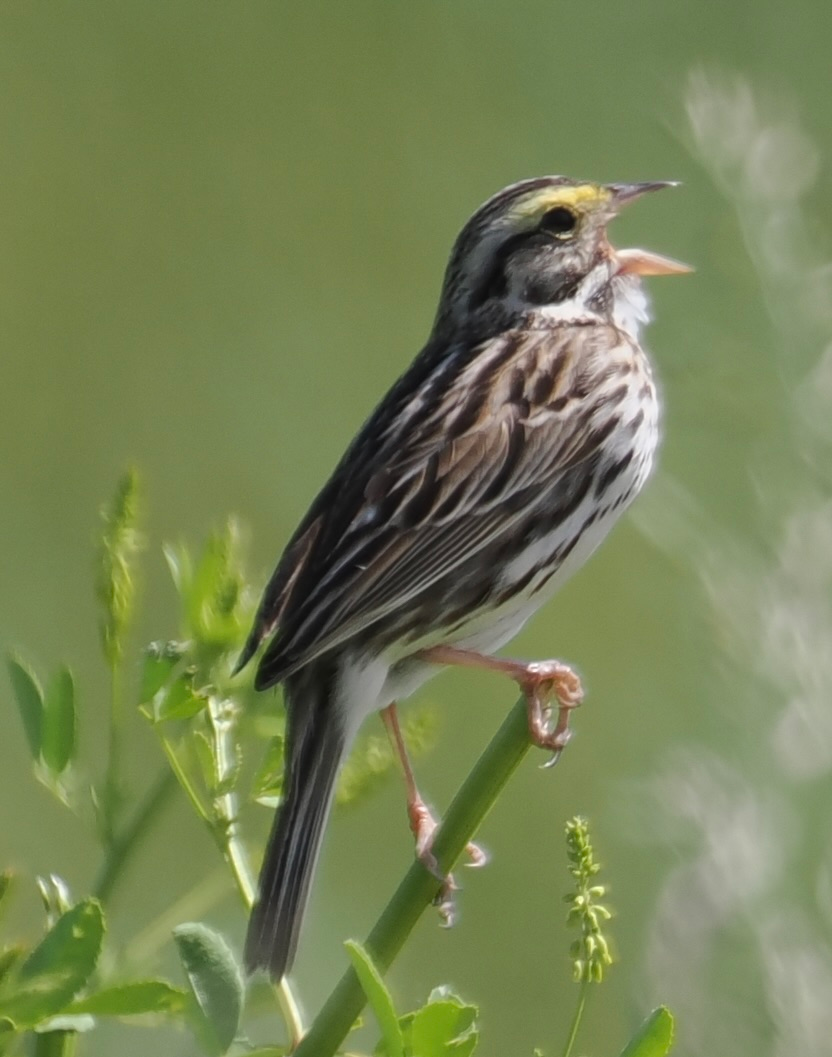
Savanah Sparrow (Photo: Deb Turski)
By Janet Kane, Friends of Pheasant Branch Conservancy Restoration and Management Committee
Each spring, billions of birds migrate north to nest and raise their young. Many grassland birds journey to or through Wisconsin every year, some coming from as far away as Central and South America. Birds of Pheasant Branch Conservancy, a 2004 WDNR publication, identified grassland species that were nesting at Pheasant Branch Conservancy, including Bobolinks, Dickcissels, Savannah Sparrows, Eastern Meadowlarks, Sedge Wrens, and Willow Flycatchers. Starting in 2013–almost a decade later–birders became increasingly concerned about the declines in grassland bird species. In 2018 the Friends convened a task force to study the issue and worked with Dane County Parks on some changes to reverse the declines. The data gathered showed that there were no Bobolinks, Savannah Sparrows, or Dickcissels, and only one or two Eastern Meadowlarks nesting in the Pheasant Branch prairies.
Area birders also reported that the declines at Pheasant Branch Conservancy were larger than at comparable sites nearby. It became apparent that the Conservancy no longer served as a nesting area for these grassland species.
Why had these species declined at Pheasant Branch?
Like humans, birds look for different characteristics when settling on a home: location and housing preference, neighborhood access, and landscape.
Nest location: Some species nest in thick vegetation, others prefer sparse vegetation; some like damp soil for nesting, others like dry soil. The height of the vegetation matters–tall, medium, or short–and the percentage of grass is also a factor. Different species use various materials. Some nest in areas with decomposing organic material (duff) while others prefer areas without duff. Some species don’t mind nesting close to walking or biking trails, while others nest a considerable distance from a trail.
Nesting neighborhoods: Some species nest in very large areas, consisting of thousands of acres. Since Pheasant Branch Conservancy is relatively small, the best hope is to attract species that can nest in areas of less than 100 acres. Some prefer a neighborhood lined with shrubs or trees while others avoid sites with woody vegetation. For many species, areas with healthy insect populations are important for feeding their young. Walking trails that cut through the neighborhoods fragment the habitat and allow access for predators. Birds, like humans, are searching for safe, relatively quiet living spaces.
Surrounding Landscape: Farmlands, suburban development, highways, fields, or natural areas, all create a menu of stresses and strains for the birds as they search for food, water, shelter, and safety from predators. Individually, species have unique requirements that must be met for them to build their nests, which ensures the survival of their young.
Since these data have come to light, Dane County Parks and the Friends have collaborated to make changes that could potentially allow the grassland birds to return. Trails through the prairie were closed to reduce fragmentation, enforcement of leash requirements was increased to minimize disturbance to birds, and signs about ground-nesting birds were posted along the trails to encourage people to minimize disrupting nesting birds inadvertently. Additionally, the establishment of native plant communities, including the restoration of the Acker property, has resulted in a doubling of the potential habitat for grassland birds.
Some species did return!
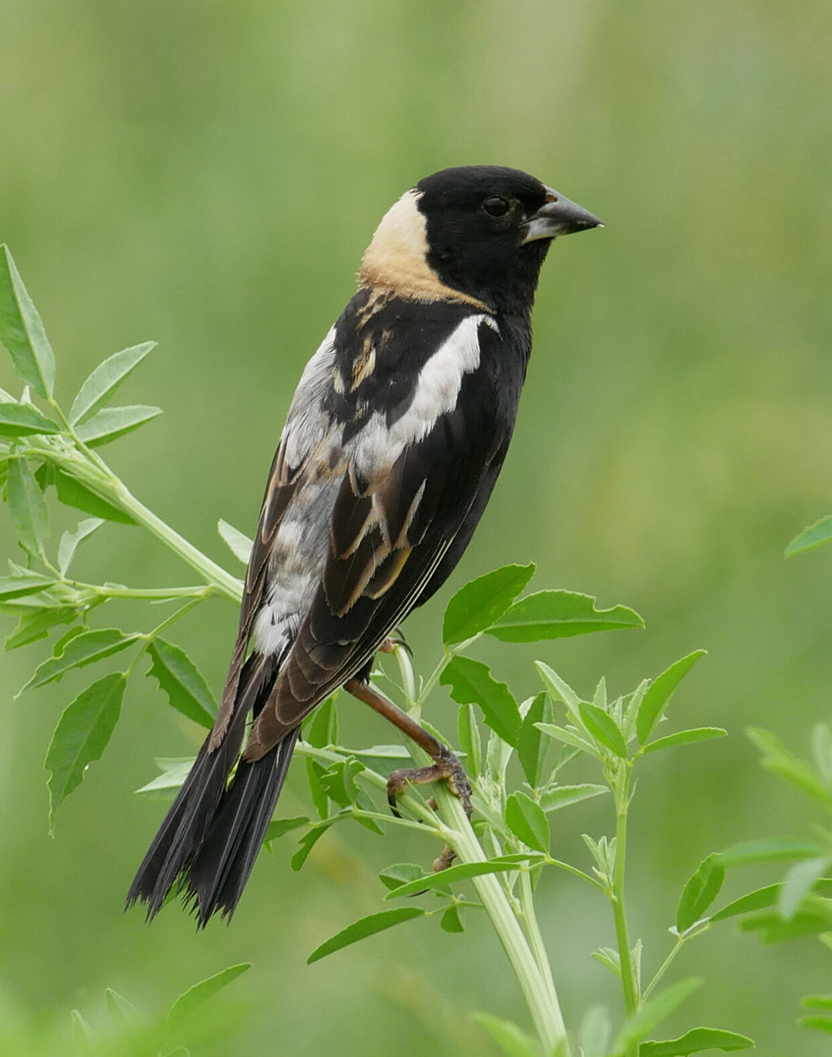
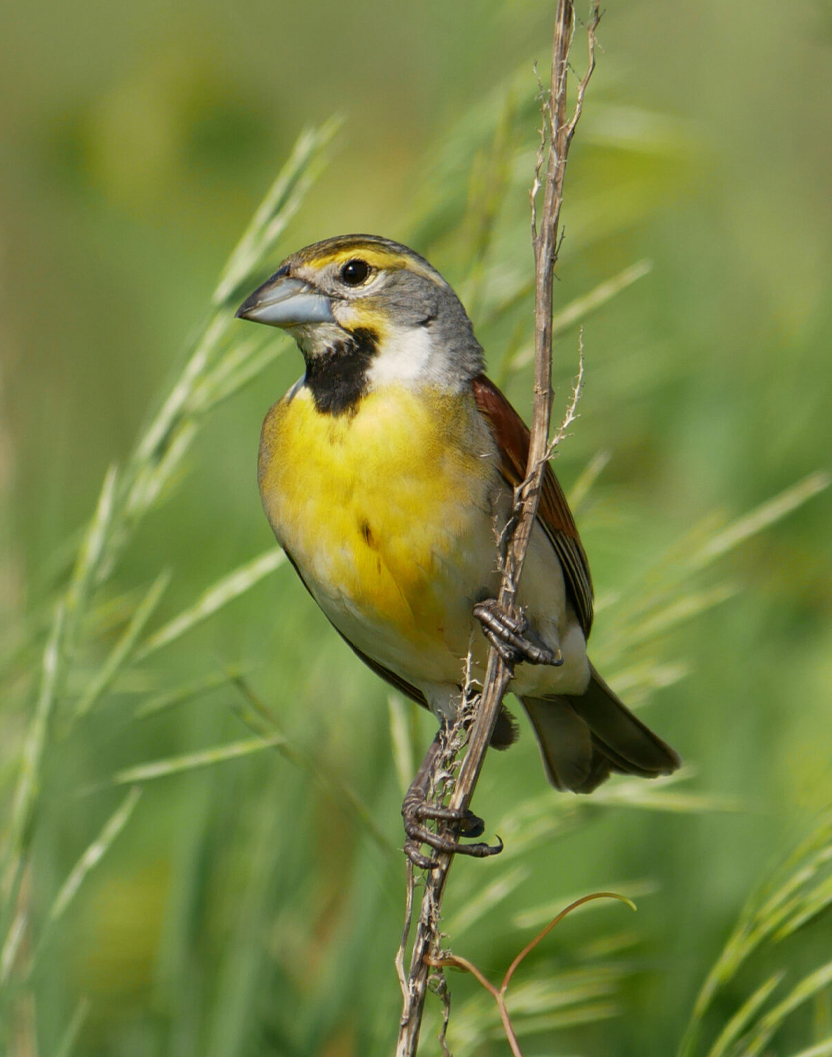
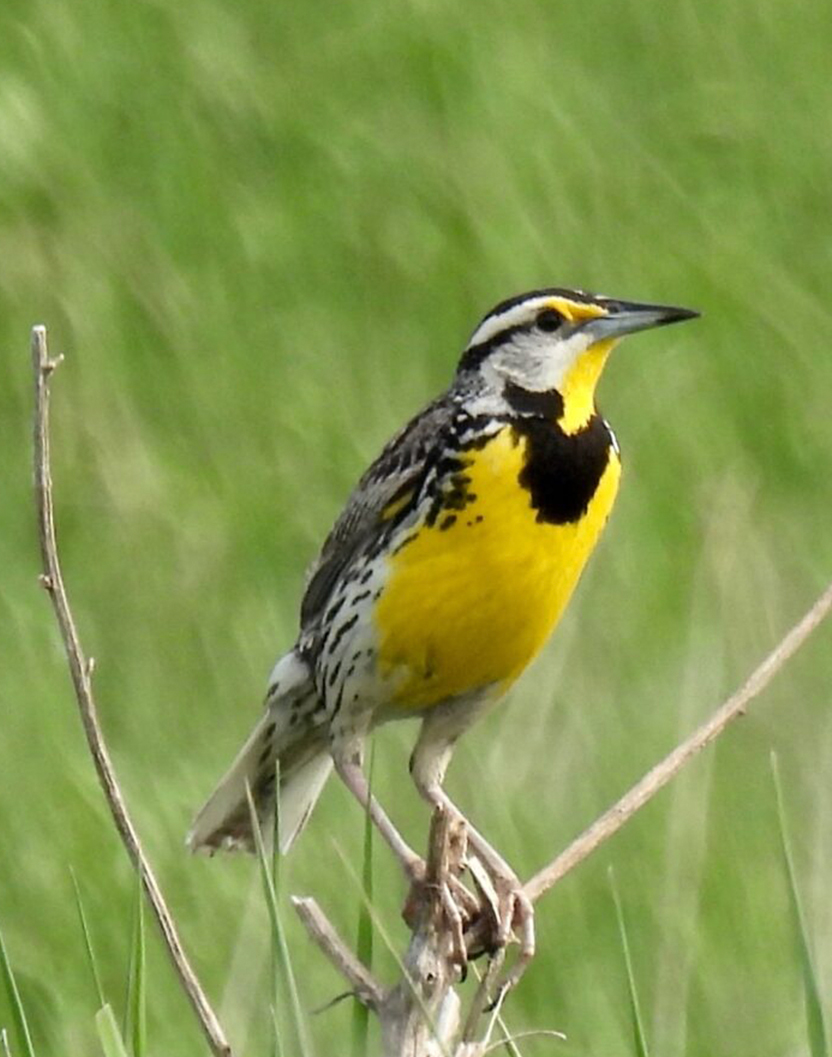
Over the course of five years, a bird monitoring group led by Janet Kane, Deb Tursksi, and Gail Smith have focused efforts on sightings of several grassland species. By 2024, birders were reporting significant increases in the average number of birds sighted per day: Dickcissels 11.8/day, Bobolinks 3.8/day, Savannah Sparrows 3.4/day, and Eastern Meadowlarks 3.5/day. Sedge Wrens and Willow Flycatchers, two species whose preferred habitat is readily available at the Conservancy, fluctuated year to year, staying relatively stable.
During this time, we have learned that thoughtful consideration is required to match the restoration of native plant communities with the habitat required for the many species of grassland birds to build their nests. This year, Dane County Parks Staff, bird monitors, the Friends’ Land Manager, and the Restoration and Management Committee are collaborating to identify policies and practices that are likely to further improve nesting habitat for grassland species.
Conservancy friends, neighbors, and visitors can help by learning about habitat requirements and ways they can support the grassland species that are currently, or have the potential, to be nesting on site.
If you are interested in birding, please contact Janet Kane for more information at janetkane@pheasantbranch.org.
For more information, see “Grassland Birds of Pheasant Branch Conservancy, Dane County Unit – Case Study”, David Kelly and Janet Kane, 2025