
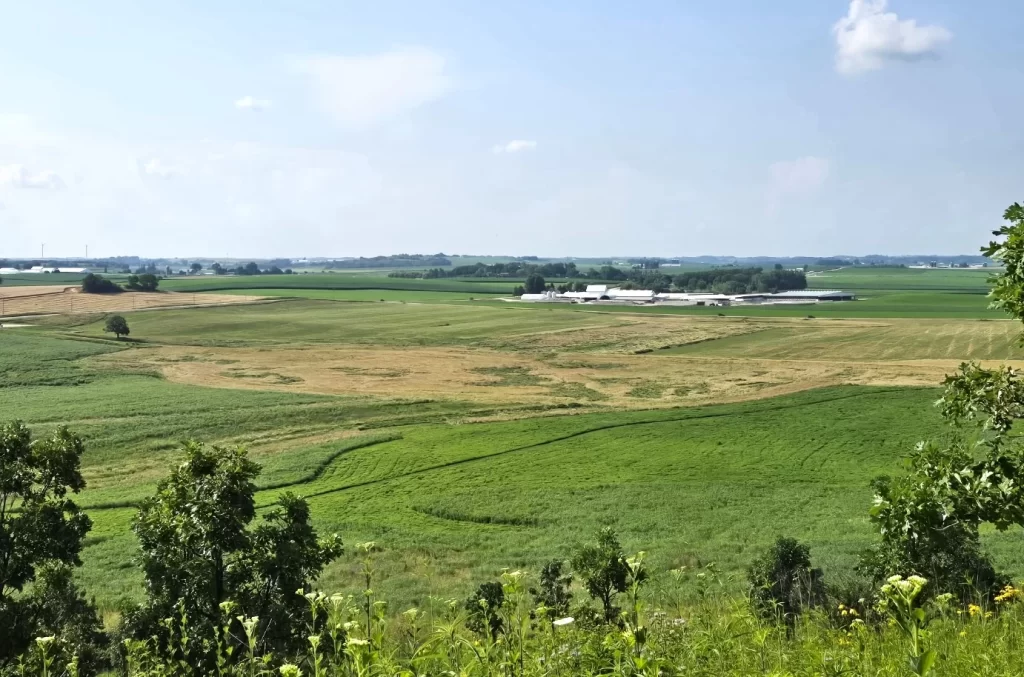
The Acker dairy farm that used to be on the northern edge of the Conservancy was purchased by Dane County in 2019 as an addition to Pheasant Branch Conservancy. This 160-acre property was the largest conservation investment for a land acquisition in the county’s history and was acquired for the purposes of additional recreational opportunities and wildlife habitat, reducing runoff, and improving the water quality of Pheasant Branch Creek and ultimately Lake Mendota.
As you look toward the east across the valley, you see a prairie in various stages of development. This prairie was established via a four-year phased approach to convert the farm to wetlands and prairie vegetation, with a quarter of the property developed per year from 2021 to 2024. A seed mix consisting of more than 100 different species (a “platinum” prairie) was used to establish high-quality native vegetation for birds, pollinators, insects, and other wildlife and serve as a seed source for future prairies.
Along with the prairie restoration, the creation of berms to store water and water monitoring was conducted by Friends of Pheasant Branch Conservancy volunteers and county staff, who are documenting the response of converting farm crop fields to native prairie vegetation during and after this four-year period. Monitoring of the dairy farm was done at three intervals over the past 20 years.
Early results from the monitoring indicate that runoff from the restored property has been decreased by more than 90% and phosphorus concentrations have been reduced by 75% over the 20-year period.
—–
History of the Acker Property
2003-2006
- Sediment ponds constructed
- Active dairy, cropland, and manure spreading
2009-10
- On-farm conservation practices implemented
2019-26
- Farmstead removed and fields replanted to prairie
—–
Benefits of Prairie Restoration
Deep-root systems of prairie plants, ranging from 3 to 15 feet below ground compared to only a few inches for typical turf grass, many benefits. In prairies, four times as much biomass grows below ground as above it. Prairies are sometimes called “upside-down-forests” where deep fibrous roots aerate, promote rain infiltration, and store carbon in the soil.
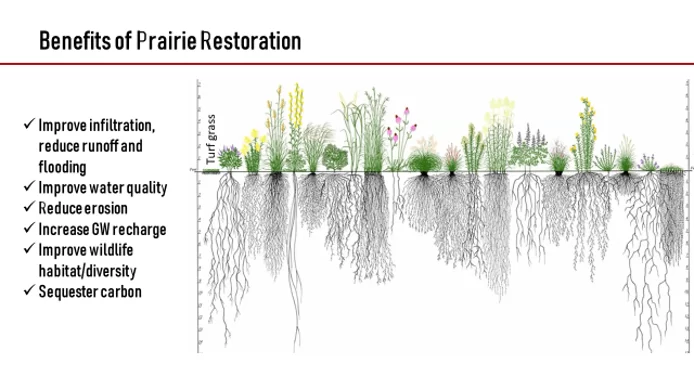
☑ Improve infiltration, reduce runoff and flooding
☑ Improve water quality
☑ Reduce erosion
☑ Increase groundwater recharge
☑ Improve wildlife habitat/diversity
☑ Sequester carbon
Related Articles
Conservancy Springs Respond to Wet Year
Friends volunteers have measured the flow of Frederick Springs and the Conservancy’s western springs to judge the impact of heavy rain and snowfall.
Learn More →
Weed Warriors Tackle New PBC Prairie
The next restoration phase of the 160-acre Platinum Prairie expansion is underway following completion of a four-year fundraising project.
Learn More →
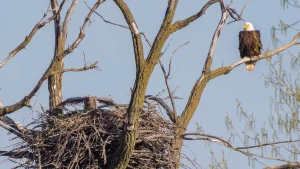
Eagles in Pheasant Branch, distance for their future
It’s important to give Pheasant Branch’s bald eagles their space, especially in the early when they are building their nests and raising their young.
Learn More →