
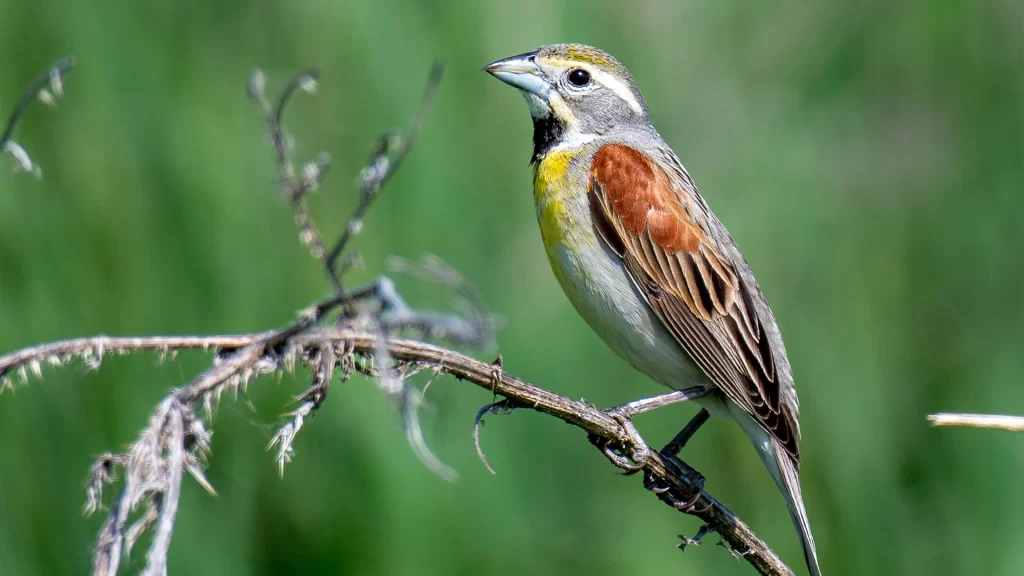
By Janet Kane, Restoration & Management Committee Member
The Pheasant Branch Bird Monitoring Project and the Bird Habitat Group provides information about connections between prairie management activities and the nesting habitat preferences of grassland bird species at Pheasant Branch Conservancy. While some birds are generalists (nesting in a wide range of conditions), many grassland species are obligates (requiring specific conditions for nesting), putting them at risk for population declines due to habitat loss.
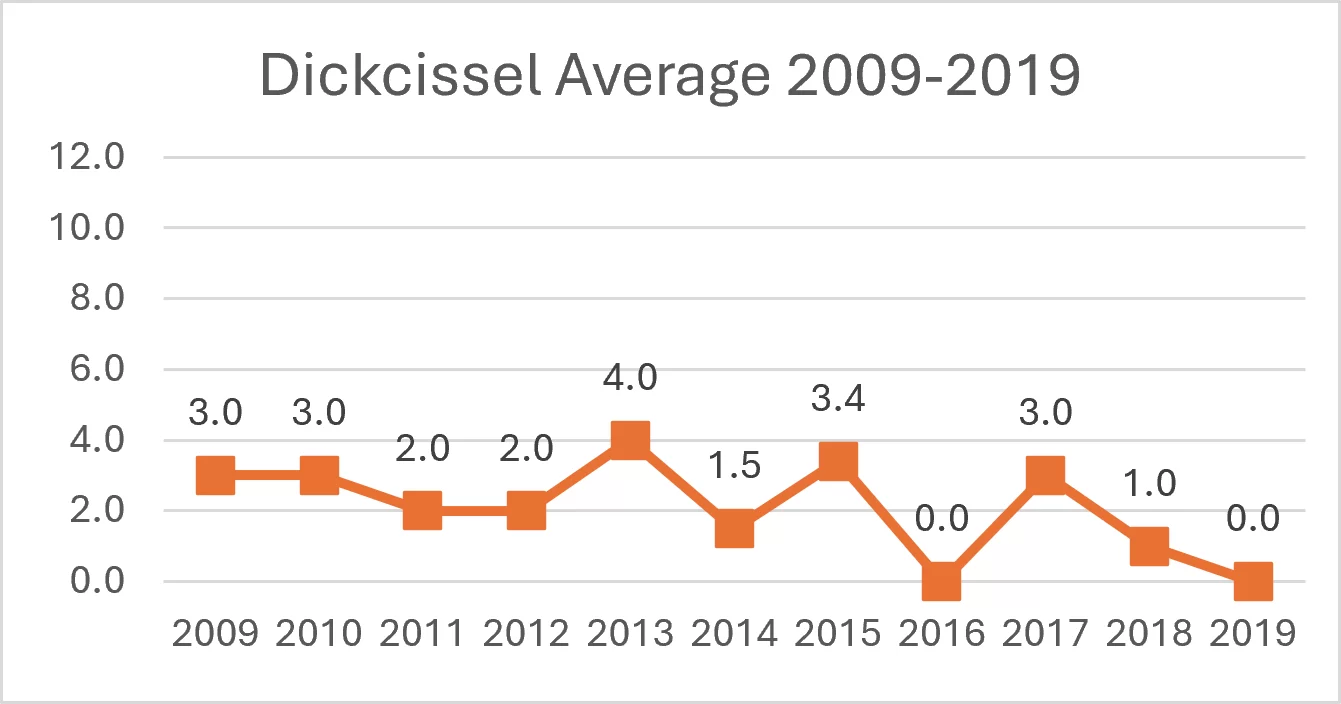
In the 1990s, dickcissels were regularly seen in the Conservancy’s Dane County Unit. In the 2010s, public eBird reports of dickcissels decreased across the decade (see graph) with no observations in 2019. Local birders reported that dickcissel declines at Pheasant Branch were more pronounced than at comparable areas nearby. Was it possible that the restoration activities reduced the suitable nesting habitat for this species?
Some dickcissel habits and preferences
Migration: Dickcissels are neotropical migrants, many overwintering in central Venezuela. Their breeding range stretches from the Gulf of Mexico to the northern boundaries of North Dakota, Minnesota, Wisconsin, Indiana, and Ohio, with highest numbers in Kansas and Nebraska. In Wisconsin, most arrive by late May and then leave in August.
Nesting area size: Dickcissels prefer larger grasslands (more than 120 acres) over smaller areas and prefer prairies with a low edge-to-interior-ratio. Lower values indicate habitat fragmentation.
Vegetation height: Preference for heights from 2 to 5 feet.
Ratio of forbs to grasses: Preference for over 50 percent forbs, providing song perches, insect prey, and nesting cover. High coverage of forbs provides shade and protection from predators during the post-fledging period. Dickcissel abundance is highest in high diversity seeded areas.
Litter Depth & Cover (related burning): Dickcissels prefer moderately deep ground litter (6-15 cm deep). They are less abundant in spring-burned fields of native species.
Shrubs and Trees: Dickcissels have low tolerance for woody cover, preferring less than 10 percent shrub cover. They generally avoid sites with wooded areas within a third of a mile. Brood parasitism by brown-headed cowbirds is higher near edges bordering wooded areas
Do management goals support habitat preferences?
Comparing the dickcissel’s habitat preferences with management goals up to 2019 raised several issues. Over the years, several new trails were created, fragmenting the available nesting areas into smaller areas of 50 acres or less. More than five years of annual spring burns to reduce invasive species in the prairie area near Pheasant Branch Road reduced the litter dickcissels required for nesting and reduced the forb-to-grass ratio.
In 2019, several pedestrian trails through the prairie were closed to reduce fragmentation. The Acker property was acquired, expanding areas of continuous habitat. Shrubs were cleared from the Acker property, and former agricultural areas were seeded with various high-diversity seed mixes. Selected shrubs and trees were also removed from the prairie areas to the south. Signs about grassland bird nesting were placed along trails.
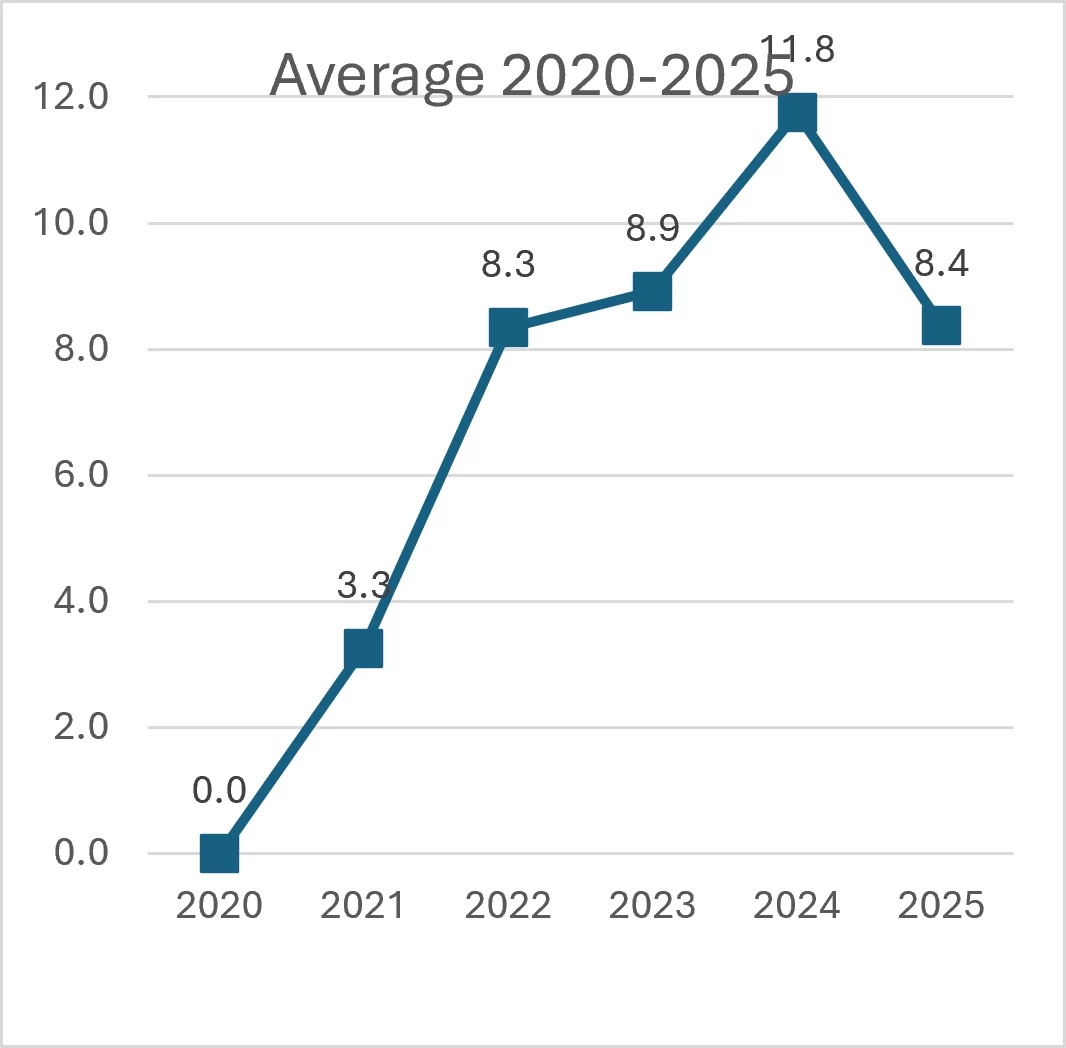
In 2020, no dickcissels were observed, but in 2021, Bird Monitors’ checklists averaged 3.3 observations. The dickcissel average kept rising until 2024 and then declined a bit by 2025. At first, dickcissels nested on the Acker property; in subsequent years, they also nested in the established prairies to the south.
Will dickcissels continue to nest in the Pheasant Branch prairies? As we learn more about habitat preferences of grassland birds and related management activities, we are hopeful. If you’d like more information about participating in the Bird Monitoring Project or the Bird Habitat Group, contact Deb Turski, Gail Smith, or Janet Kane at [email protected].
Related Articles
How Can Neighbors Help Protect Pheasant Branch Conservancy?
Order a copy of our brochure to learn what species of invasive plants you should remove from your yard.
Learn More →
The Effects of Salt Use in Winter
Salt can have a detrimental effect on local waterways. What does that mean for Pheasant Branch Creek?
Learn More →
Building Neighborhoods: Looking for a Place to Nest
Learn about the steps the Friends take to attract migrating grassland birds like bobolinks and meadowlarks to the Conservancy.
Learn More →