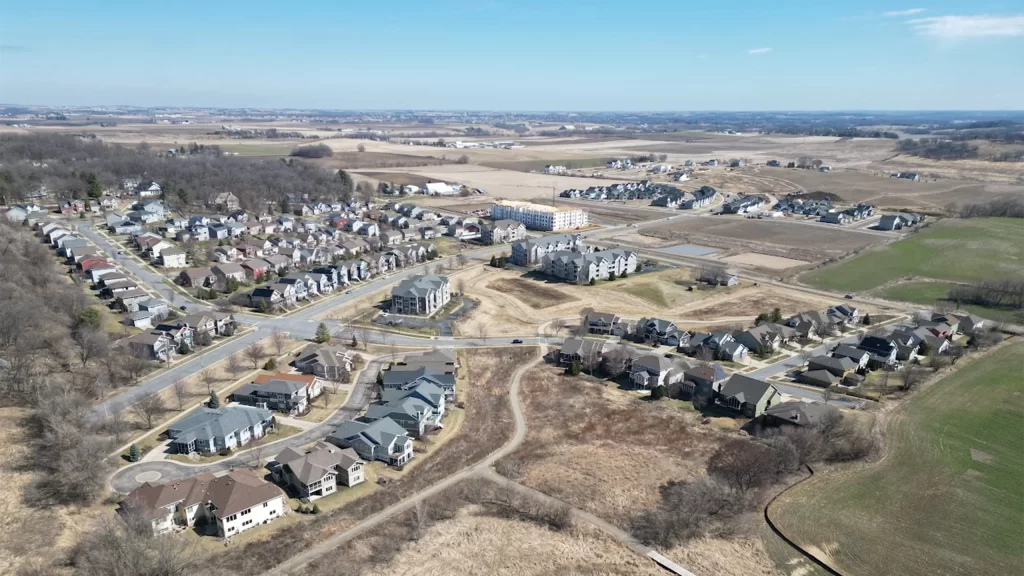
For the first time in over two decades, subdivision development has begun on property adjacent to the Conservancy, and while separated by a roadway, the stormwater runoff from the developing subdivision could have downstream impacts.
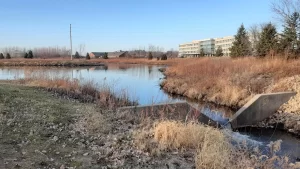
The Redtail Ridge development is planned to include over 850 new homes on the former agricultural area expanding the City of Middleton border to the north between High Road and Pheasant Branch Road. While some runoff will continue to drain east and into the Conservancy prairies, the majority of runoff is being directed west and south, where it will join additional surface runoff before entering the lowland wetland and a Western Tributary and then flowing directly into the Conservancy via a culvert under Pheasant Branch Road.
A healthy wetland ideally acts as a sponge and absorbs water. The runoff is slowed down which reduces erosion and keeps nutrients available for use by vegetation. Unfortunately, this wetland is already burdened by failed upstream stormwater management west of High Road and increased runoff when Graber Pond overtops its western bank.
For many years the Friends have partnered with the DNR’s Aquatic Invasive Species program, putting hundreds of thousands of dollars toward the removal of invasive species, and in particular hybrid cattails, from Pheasant Branch Marsh. Our work has continued from north to south, as much of this investment has been made where this Western Tributary enters the Conservancy.
With the water comes pollutants. The Redtail Ridge developer has proposed several measures to mitigate the potential impacts on the Conservancy, many of which were the result of working together with the Friends and the City early in the planning for the project. Compared to the preliminary stormwater plan, the approved plan implements some “low impact development” (LID) strategies which favor treating smaller amounts of runoff higher up in the watershed rather than large regional stormwater features. LID looks good on paper, but there is more that is needed. The development, and its future residents, must consider their individual actions. Care must be taken to landscape with native species, to drain downspouts to rain gardens, and to limit the amount of impervious surfaces to allow rain and snow to be absorbed into the earth and recharge our groundwater. Neighborhood covenants and city ordinances could ensure that these actions are taken.
Our Watershed Committee continues to monitor developments within the Pheasant Branch Watershed, especially those with impacts on the Conservancy. We cannot stress enough the importance of slowing down runoff and treating it higher up in the watershed. Relying on already exhausted lowlands is not a solution, but keep in mind that these are the most critical areas and need support and management to protect the Conservancy.
Related Articles
Friends to Monitor Runoff from New Residential Development
The Friends’ Watershed Committee will measure the impacts of the construction at the Redtail Ridge development.
Learn More →
Graber Greenway: An Important Area in Transition
Get a closer look at the development of the Graber Greenway adjacent to Pheasant Branch Conservancy in the northwestern corner of Middleton.
Learn More →
Graber Pond and the Community Water Monitoring Network
Long-term monitoring of bodies of water like Graber Pond is a crucial part of ecosystem science and helps illustrate the area’s ecological health.
Learn More →