
Pheasant Branch Conservancy (PBC) is a diverse and beautiful natural area waiting for you to visit for multiple reasons and many personal benefits. Unlike PBC, nature-free environments—along with busy urban and industrial areas—most often come with unwelcome stress, noise, a lack of green spaces, and artificial light that is low in healthy intensity (often less than 10 percent of natural light), unnatural in spectra, and disruptive to our rhythms. Although many of us must spend parts of our days in these less-than-healthy environments, we would do well to visit natural green and blue (coastal and inland waterways) spaces when we have the opportunity to do so. Following are the reasons we might consider visiting PBC or other natural areas.
While the physical health benefits of walking, running, biking, paddling, swimming, and the like are quite obvious, what is not as obvious to many are the emotional and mental health benefits of spending time in natural spaces. Nature-devoid spaces are known to cost us disruptions in mood, sleep, and diurnal rhythms, as well as short-term impairment in attention and cognition, academic impairments in youth, and cognitive decline in the elderly (Anthes, 2009; Higgins, et al., 2005; Küller, et al., 2006). These empirical findings are replete with evidence that more time in natural environments diminishes these negative effects and comes with the promise of even more benefits.
Our autonomic nervous system is largely bifurcated; that is, it responds to stress and threats along a sympathetic pathway (SNS)—sometimes referred to as the “fight-or-flight” response—with specific neurotransmitters that ready us to respond quickly to evade these apparent threats. It is quick and powerful, and we know when it is happening. The other side of this nervous system is the parasympathetic pathway (PSNS), sometimes referred to as the “rest, digest, and chill” response. It is slower to respond, and the neurotransmitters it releases assist us in enjoying our lives and helping us relax in our daily activities.
Simply stated, we know that the more time we spend in stressful environments, the more our SNS is activated. Conversely, the more time we spend in green and blue natural spaces, the more our PSNS is activated to counterbalance those SNS experiences. Both are necessary and helpful as humans; however, in our fast-paced and often stressful lives, it is too often the SNS side of us that is over-activated, and the harmful effects on our physical and emotional health are clear. That is essentially why more time spent in PBC, or natural spaces like it, can be so beneficial to both your physical and mental health.
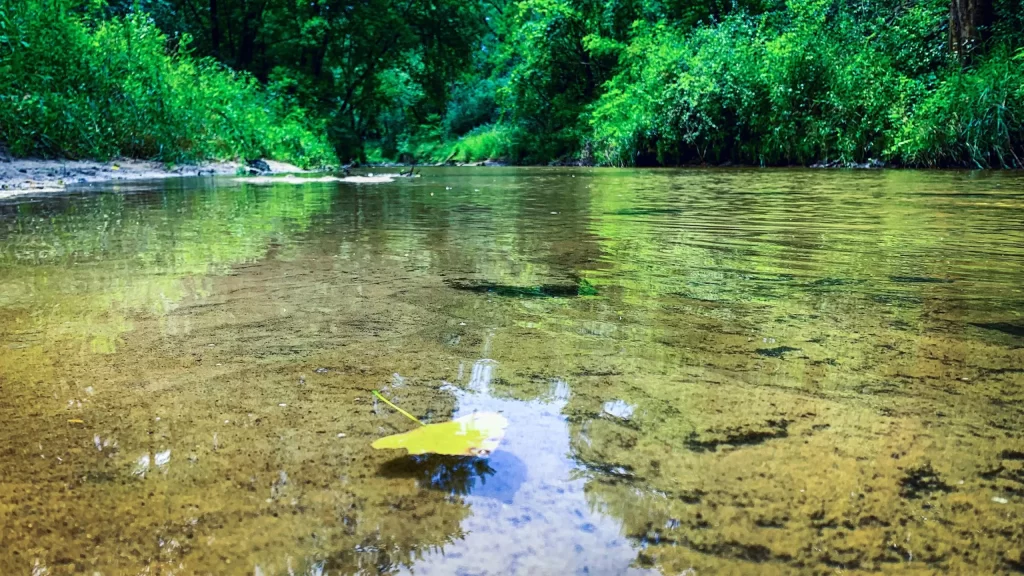
One area of research rich in findings is “forest bathing,” which is literally time spent in the natural environments of forests. Rather than recount citation after citation in the research literature for you, I invite you to simply search any of the key terms found in this short article for further reading. The American Psychological Association is another great resource for this area. Blue Mind by Wallace J. Nichols is also a rich resource, as it takes “green-related health” and extends its findings to time spent in, under, on top of, or even near water for added benefits. PBC has both green and blue!
Related Articles
Feathers, Trails and Tails at Pheasant Branch Conservancy
Read a recap of this Eagle Scout program that educated visitors about the Conservancy’s leashed-dog policies.
Learn More →
What is a Conservancy?
What’s the difference between a park and a conservancy? How are each managed? Take a deeper dive and learn more about what the Friends do.
Learn More →
Conservancy Days: Connecting Community, Conservation & Place
Join us at the Middleton Public Library every other month for a series of educational events where you’ll learn all about Pheasant Branch Conservancy.
Learn More →